
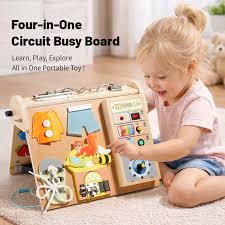
The best-selling Montessori toys for toddlers that are popular for export focus on natural materials, open-ended play, and skill development. They are designed to be simple yet engaging, fostering independence and creativity in young children, making them universally appealing.
What Makes Montessori Toys a Top Choice for Toddlers
Montessori toys are special. They focus on letting kids lead their own learning. This is called self-directed education.
The toys are made to help toddlers learn through play. They are not just about bright colors or loud noises. Instead, they encourage focus and problem-solving.
This approach makes them very popular with parents and educators alike.
Why do these toys work so well? They are designed to match a child’s natural way of learning. Toddlers learn best by touching, doing, and exploring.
Montessori toys give them many chances to do just that. They are often made from simple, natural materials. Think wood, cotton, or metal.
These materials feel nice and are safe for little hands. They also help children connect with the real world around them.
The core idea behind Montessori is respect for the child. Toys are tools for learning. They are not meant to distract.
They help build skills. These include fine motor skills, like picking up small objects. They also help with gross motor skills, like walking and balancing.
Cognitive skills, like understanding cause and effect, are also boosted. And don’t forget social and emotional growth. Learning to wait for a turn or share a toy is a big part of it.
Many Montessori toys are also what we call “open-ended.” This means they don’t have just one way to be used. A simple wooden block can be a car, a house, or part of a tower. This sparks imagination.
Children create their own games and stories. This is much more engaging than toys that only do one thing. It lets their creativity shine.
It also means the toys can grow with the child. What a toddler does with a block might be different from what a preschooler does.
These toys often reflect real-life objects. This helps toddlers understand their world. For example, a small wooden broom helps them feel like they are helping clean.
A set of stacking bowls can mimic how food is served. This connection to reality is very important. It makes learning feel meaningful.
It shows children how they can participate and contribute.
My First Montessori Toy Experience: A Block of Realization
I remember walking into a friend’s home. She had a two-year-old boy named Leo. I had always brought him the latest flashing, beeping toys.
They usually got a quick look and then were forgotten. But this time, her living room had a basket of wooden blocks. They were simple, plain wood, in different shapes and sizes.
I watched Leo. He didn’t ask for his usual cartoon-themed truck.
Instead, he went straight for the blocks. He picked one up. He turned it over in his hands.
He stacked another one on top. He made a small tower. Then, he knocked it down with a happy giggle.
It wasn’t just noise; it was pure joy in discovery. He spent a long time just building and exploring. I felt a little bit silly.
My expensive plastic toys sat in the corner. Leo was totally engrossed in these simple wooden pieces. It was a moment of pure learning and happiness for him.
And for me, it was a quiet lesson about what truly matters in play.
Key Qualities of Export-Ready Montessori Toys
Natural Materials: Many best-sellers use wood, cotton, or bamboo. These are safe and feel good.
Simple Design: They are not over-complicated. This lets kids use their own ideas.
Skill Building: Toys focus on things like fine motor skills and problem-solving.
Durability: Made to last. They can handle a lot of play and travel well.
Universality: Concepts like stacking or sorting are understood everywhere.
The Elements That Drive Montessori Toy Popularity for Export
When thinking about toys that travel well, meaning they are good for export, several things stand out. Montessori toys often have a timeless appeal. This is a big reason they are sought after globally.
People in different countries look for the same things in toys for their children. They want quality, safety, and good learning value. Montessori toys hit all these points.
The use of natural materials is a huge plus. In many cultures, there’s a growing desire for eco-friendly and non-toxic products. Wood, for instance, is seen as warm, durable, and safe.
It doesn’t have the chemical smells that some plastics can have. This makes parents feel more confident. It also connects children to nature, which is a core Montessori principle.
This connection is valued everywhere.
Simplicity is another key factor. A toy that is too complex might rely on specific language or cultural symbols. This can make it harder for children in other countries to understand.
Simple shapes, basic functions, and intuitive designs are easier to grasp. A set of wooden rings on a post is understandable in any language. It teaches size, order, and fine motor control, no matter where you are.
The focus on skill development is also universal. Parents everywhere want their children to be smart and capable. They want them to learn how to solve problems, think critically, and be creative.
Montessori toys are designed to foster these exact skills. They help children build confidence as they master new abilities. This makes them a valuable investment for families worldwide.
Durability plays a big role too. Toys that are exported need to withstand shipping and handling. They also need to be sturdy enough for frequent use by energetic toddlers.
Wooden Montessori toys are often built to last for years, even for multiple children. This makes them a smart purchase. They hold their value and can be passed down.
This resilience is highly appealing in markets where parents are looking for long-term value.
Finally, the educational philosophy itself is globally recognized. The Montessori method has a strong reputation for effectiveness. Parents who have heard of it or experienced it want to provide that kind of learning for their children.
This creates demand across borders. It’s not just a trend; it’s a respected educational approach that resonates with parents seeking the best for their kids.
Top Montessori Toy Categories Popular for Export
Wooden Puzzles: Simple shape puzzles, knob puzzles, and sequencing puzzles.
Stacking Toys: Rings, blocks, and cups that teach size and order.
Sorting Toys: Color sorters, shape sorters, and object sorting activities.
Fine Motor Skill Tools: Lacing beads, threading toys, and tools for scooping.
Pretend Play Items: Small wooden kitchen items, vehicles, and animals.
Real-World Scenarios: Where Montessori Toys Shine
Think about a small apartment in a bustling city. Space might be limited. Parents want toys that don’t take up too much room but offer a lot of play value.
A set of simple wooden blocks or stacking cups can be used in many ways. They can be stored easily. They don’t need batteries or have small parts that easily get lost.
This makes them ideal for compact living spaces common in urban areas worldwide.
Consider a family living in a place with a long winter. Children spend more time indoors. They need activities that keep them engaged and learning.
Open-ended toys like wooden vehicles or animals can be used to create entire imaginary worlds on the living room floor. This provides hours of creative fun without screens. It helps children develop their storytelling skills and problem-solving abilities during long indoor periods.
In cultures where extended family lives together, toys that encourage calm, focused play are often appreciated. Toddlers can be active, but sometimes a quiet activity is needed. A threading activity or a simple puzzle allows a child to concentrate.
This can be done near other family members without causing disruption. It also teaches patience and focus, skills valued in many societal structures.
Think about educational settings abroad. Many preschools and early learning centers adopt a Montessori or similar child-led approach. They are actively looking for durable, high-quality toys that support this philosophy.
Toys that are made from natural, safe materials are preferred. They also need to be easy to clean and maintain. Montessori toys fit these needs perfectly, making them a staple in international educational institutions.
Even in areas where resources are scarce, the appeal of simple, durable toys is strong. A set of wooden blocks can be a child’s entire toy collection. Its ability to transform into countless creations means it never gets boring.
This makes Montessori toys a sustainable choice. They offer long-term play value, reducing the need for constant new purchases. This is a benefit for families everywhere, regardless of their economic situation.
Quick Scan: Why Toddlers Love These Toys
Feels Good: Natural materials like wood are pleasant to touch.
Easy to Hold: Simple shapes fit small hands well.
Can Do Anything: Open-ended play sparks imagination.
Helps Them Learn: Builds important skills without pressure.
Makes Them Feel Capable: Encourages independence.
What This Means for You: Choosing the Right Montessori Toys
When you are picking out Montessori-inspired toys, look for a few key things. First, check the materials. Are they natural like wood, cotton, or bamboo?
Are there any sharp edges or small parts that could break off easily? For toddlers, safety is always the top priority.
Next, think about the play value. Does the toy have one specific use, or can your child use it in many different ways? A simple stacking ring toy is great.
Your child can stack them, sort them by size, or even use them as wheels for a car. Toys that encourage imagination and problem-solving are usually the best.
Consider the skills the toy helps develop. Does it help with hand-eye coordination? Does it encourage sorting or counting?
Does it allow for pretend play? All these are important for a toddler’s growth. Toys that support multiple areas of development are excellent choices.
Don’t worry about toys being too plain. The beauty of Montessori toys is their simplicity. They allow the child’s mind to do the work.
Bright, flashy toys can sometimes distract from this learning process. Simple, well-made toys are often the most engaging in the long run.
If you are thinking about exporting or buying for someone abroad, remember that universality is key. Toys that teach basic concepts like colors, shapes, sizes, and cause-and-effect are understood by children everywhere. These are the toys that tend to have the widest appeal and success.
Myths vs. Reality: Montessori Toy Beliefs
Myth: Montessori toys are boring because they are simple. Reality: Their simplicity allows for rich, imaginative play and deep learning.
Myth: You need a lot of expensive Montessori toys. Reality: A few well-chosen, open-ended toys offer more value than many single-purpose ones.
Myth: Montessori toys are only for specific schools. Reality: The principles and toys are beneficial for any child at home.
Myth: Toddlers will break wooden toys easily. Reality: Good quality wooden toys are very durable and can withstand typical toddler play.
Quick Fixes and Tips for Choosing Popular Montessori Toys
When you’re on the hunt for best-selling Montessori toys for toddlers, keep these tips in mind. They help you pick the ones that are likely to be a hit. They also make sure the toys are suitable for little hands and curious minds.
Focus on Natural Materials: Always start by looking for toys made of solid wood. Birch, beech, and maple are great choices. They are smooth, durable, and safe.
If you see painted wood, check that the paint is non-toxic and child-safe. Natural fabrics like organic cotton are also good for soft toys or play cloths.
Prioritize Open-Ended Play: Does the toy have multiple uses? A set of wooden stacking cups can be used for stacking, sorting, nesting, or even as small containers for other treasures. Blocks, rings, and simple animal figures are excellent examples.
Avoid toys with one specific button to press or one phrase to say.
Check for Skill Development: Look for toys that promote specific skills. Puzzles with large knobs help fine motor skills. Threading beads teach hand-eye coordination and sequencing.
Shape sorters help with cognitive development and problem-solving. Think about what your child is working on learning.
Simplicity is Key: Don’t be afraid of toys that look plain. The less a toy “does” on its own, the more the child has to do. This is where the real learning and creativity happen.
Think about a simple wooden car versus a battery-operated car. The wooden one can be anything the child imagines.
Durability Matters: For export, or even just for active toddlers at home, choose toys that are built to last. Well-made wooden toys will withstand drops and rough handling. They can be passed down or resold.
This makes them a wise investment.
Consider Universality: If you are buying for a gift that might travel, choose toys that don’t rely on specific cultural understanding or language. Concepts like stacking, sorting, and basic pretend play are universal. These toys have broader appeal.
Read Reviews: See what other parents say. Look for feedback on how well the toy holds up over time and how engaged their children are with it. This can give you real-world insights.
Safety First: Always check for age appropriateness. Ensure there are no small parts that could be a choking hazard for young children. Look for certifications that confirm the toy meets safety standards, like those from the Consumer Product Safety Commission (CPSC) in the U.S.
Observational Flow: A Toddler’s Montessori Playtime
Step 1: Exploration Child selects a toy, like wooden blocks, from a basket.
Step 2: Manipulation They touch, feel, and examine the blocks. Notice the wood grain.
Step 3: Experimentation They try stacking one block on another. It falls.
Step 4: Problem-Solving They adjust their grip or try a different block. They try a wider base.
Step 5: Creation A small tower stands! A sense of accomplishment.
Step 6: Extension The tower becomes a building in a pretend town. New ideas emerge.
Frequently Asked Questions About Montessori Toys for Toddlers
What are the main benefits of Montessori toys for toddlers?
Montessori toys help toddlers develop fine motor skills, hand-eye coordination, problem-solving abilities, and creativity. They encourage independent play and self-directed learning. They also foster concentration and a sense of accomplishment as children master tasks.
Are wooden toys better than plastic toys for toddlers?
Wooden toys are often preferred in the Montessori philosophy because they are natural, durable, and aesthetically pleasing. They connect children to natural materials. However, high-quality, well-designed plastic toys can also be beneficial if they are safe and offer open-ended play opportunities.
How do I know if a toy is truly “Montessori-inspired”?
Look for toys that are simple, made from natural materials, and designed for open-ended play. They should encourage a child to think and explore, rather than just entertain passively. They often focus on practical life skills or sensory exploration.
What is considered “open-ended play” for toddlers?
Open-ended play means a toy can be used in many different ways. A set of blocks, for example, can be a house, a car, a tower, or anything a child imagines. These toys don’t have a single, prescribed way of being used, which sparks imagination.
Are Montessori toys good for toddlers who have short attention spans?
Yes, Montessori toys can be very helpful. Their simple, focused nature encourages concentration. By allowing children to work at their own pace and choose their activities, these toys can help build attention span over time.
The success of completing a task also builds confidence.
What are some examples of popular Montessori toys for toddlers that are good for export?
Popular examples include wooden stacking rings, simple wooden block sets, shape sorters, basic wooden puzzles with knobs, threading beads, and small wooden vehicles or animals. These items teach universal concepts and are durable for travel.
Conclusion: The Lasting Appeal of Simple, Smart Toys
The world of toddler toys is vast. But the best-selling Montessori toys stand out. They offer deep value through simplicity.
They encourage children to learn by doing. Their natural materials and open-ended design make them loved by kids and trusted by parents everywhere. These qualities ensure their popularity for homes and for export, connecting children through play.