
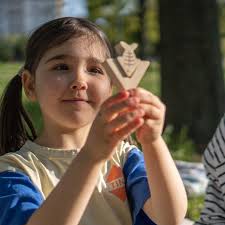
The global export of gender-neutral Montessori toys is rising. These toys focus on open-ended play and child-led learning. They support development for all children. This trend reflects a growing awareness of inclusive play and educational philosophies.
What Are Gender-Neutral Montessori Toys?
Let’s break down what makes these toys so special. First, think about gender-neutral Montessori toys. The “Montessori” part comes from a learning method.
Dr. Maria Montessori developed it. It focuses on how children learn best.
They learn by doing things themselves. They explore with their hands and senses. Montessori toys are simple.
They are often made from natural materials like wood.
These toys are designed to be open-ended. This means a child can use them in many different ways. A simple wooden block can be a car.
It can be a building brick. It can be a phone. There’s no single “right” way to play.
This encourages creativity. It helps children solve problems. It builds their imagination.
This is a big part of the Montessori philosophy.
Now, add “gender-neutral” to that. This means the toys are not made for boys or girls specifically. They are for all children.
They don’t have colors or themes that say “this is for a boy” or “this is for a girl.” Think about classic wooden puzzles. Or stacking rings. Or sorting shapes.
These are great examples. They appeal to all children. They help them learn essential skills.
Skills like fine motor control. Skills like shape recognition. Skills like hand-eye coordination.
The goal is to let the child lead their own learning journey. The toy is a tool for exploration. It’s not about a predefined role.
This approach helps all children feel included. It lets them explore all their interests freely. It doesn’t limit them based on stereotypes.
This is why the export of these toys is growing so much. Parents worldwide want this for their kids.
Why Are Parents Seeking These Toys?
It makes sense. You see your child and want the best for them. You want them to grow up confident.
You want them to be creative. You want them to be smart. You want them to be happy.
You want them to feel good about themselves. Toys play a big part in this. Traditional toys often show boys and girls in specific roles.
Pink toys for girls. Blue toys for boys. This can send a subtle message.
It can tell kids what they “should” like. Or what they “should” be good at. That’s not what many parents want anymore.
Many parents today are more aware. They know that children are individuals. They have unique talents and interests.
They don’t want these interests limited. They see their daughters interested in building. They see their sons interested in caring for others.
Or perhaps the other way around. They want toys that support these diverse interests. They want toys that let children explore without judgment.
This is where gender-neutral Montessori toys shine.
These toys allow for deep concentration. They foster independence. They help with practical life skills.
A child might spend time carefully stacking blocks. Or they might be sorting colorful beads. They are learning.
They are developing. They are doing it at their own pace. This process builds their self-esteem.
It shows them they can master tasks. It builds resilience. Parents see this.
They love it. They want to give their children these opportunities. This desire is a huge driver for the trend.
It’s about more than just play. It’s about raising well-rounded, confident individuals.
The rise of social media also plays a role. Parents share photos of their children playing. They share what toys they love.
They show how their kids engage with different toys. This creates a ripple effect. Other parents see these positive examples.
They see children happily playing with toys. They see the developmental benefits. They start looking for similar toys.
They want that same joy and learning for their own families. It creates a community of parents focused on conscious, developmental play. This global sharing makes trends like gender-neutral Montessori toys spread faster than ever before.
The Rise of the Montessori Method Globally
The Montessori method isn’t new. But its popularity is certainly surging. It started over a hundred years ago.
Dr. Montessori saw that children learn best when they are in control. They learn by exploring their environment.
They learn by interacting with materials. They learn by following their own curiosity. This is very different from traditional schooling.
Where a teacher often dictates the pace and the subject. Montessori classrooms are prepared environments. They have child-sized furniture.
They have accessible materials. Everything is designed for the child’s independence.
The method emphasizes practical life skills. Children learn to care for themselves and their space. They learn to pour water.
They learn to dress themselves. They learn to clean up. These skills build confidence.
They build a sense of capability. Montessori also focuses on sensory exploration. Materials have different textures.
They have different shapes and sizes. This helps children understand the world through their senses. It’s a hands-on approach to learning.
It’s about deep understanding, not just memorization.
As more parents seek educational approaches that value a child’s natural development, Montessori gains traction. They see the results. They see children who are independent.
They see children who are engaged. They see children who are curious. They see children who are kind.
These are all qualities parents want to foster. They start looking for ways to bring this philosophy home. They might enroll their child in a Montessori school.
Or they might seek out Montessori-inspired toys for home. This global recognition is fueling the demand for toys that align with these principles.
The educational community also recognizes the benefits. Educators and child development experts often point to Montessori principles. They highlight how self-directed learning boosts problem-solving skills.
They show how hands-on activities improve retention. As research continues to support these ideas, the Montessori method gains even more credibility. This academic backing reassures parents.
It makes them feel more confident in choosing Montessori-aligned products. This widespread acceptance is a key reason why the export of these specific toys is booming worldwide. It’s a philosophy that resonates deeply with how children naturally learn and grow.
Key Principles of Montessori Play
Child-Led Exploration: The child chooses what to play with. They set the pace. This builds independence.
Hands-On Learning: Using senses to understand the world. Touching, feeling, manipulating objects.
Open-Ended Materials: Toys with many uses. They encourage creativity and problem-solving.
Focus on Development: Toys support specific skills. Like fine motor control or cognitive growth.
Natural Materials: Often wood, cotton, or metal. These feel good and are durable.
The Global Appeal of Natural Materials
You know, when you touch a well-made wooden toy, there’s just something different about it. It feels solid. It feels warm.
It feels natural. This is a big part of why parents are drawn to Montessori-style toys. Many of these toys are made from wood.
They might also use other natural materials like cotton or metal. This is a conscious choice. It stands in contrast to many plastic toys.
Plastic toys can sometimes feel cold. They might have bright, artificial colors. They can also raise concerns about chemicals.
Parents are increasingly thinking about this. They want to reduce the amount of plastic in their homes. They are looking for safer alternatives.
Natural materials like wood are often seen as safer. They are also more durable. A good wooden toy can last for generations.
It can be passed down from sibling to sibling. Or even from one generation to the next.
The look and feel of natural materials are also appealing. They have a certain aesthetic. They blend well into home decor.
They don’t scream “toy” in a way that some plastic items do. This is a subtle but important factor for many families. They want a home that feels calm and welcoming.
Toys that are made from natural materials often contribute to this feeling. They have a timeless quality. They are beautiful to look at.
They are also wonderful to hold and play with.
This global appreciation for natural materials is strong. It’s not just about aesthetics or safety. It’s also about sustainability.
Many parents are concerned about the environment. They want to make choices that are better for the planet. Toys made from sustainably sourced wood are a good option.
They are often biodegradable. They have a smaller carbon footprint than many manufactured plastic items. This eco-conscious aspect further boosts the appeal.
It aligns with a broader lifestyle choice for many families. They want to live more simply and sustainably. This desire for natural, eco-friendly materials is a major force behind the export trend.
Export Trends: Where Are These Toys Going?
The demand for these thoughtful toys isn’t limited to one country. It’s a global phenomenon. Think about it: parents everywhere want their children to thrive.
They want to give their kids the best start. So, as manufacturers and designers create these gender-neutral Montessori toys, they are looking to export them. They see markets opening up in many places.
This export trend is really taking off.
We’re seeing significant growth in exports to countries like Canada. Parents there share many of the same values. They seek educational toys.
They value sustainable products. Then you look at Europe. Countries like Germany, France, and the UK have a long tradition of valuing quality children’s products.
They are very receptive to the Montessori philosophy. They also have a strong consumer base that prioritizes eco-friendly and durable items.
Australia and New Zealand are also strong markets. Their populations often share a similar outlook to North America. They value outdoor play and natural environments.
This naturally extends to the toys they choose for their children. Even in parts of Asia, where traditional toy markets might be different, there’s a growing segment of parents. These parents are educated.
They are globally aware. They are seeking out these types of developmental toys. They are willing to import them.
South America is also seeing an increase in interest. As awareness of early childhood education grows, so does the demand for tools that support it. This global reach means that companies producing these toys are expanding.
They are working with international distributors. They are navigating customs and shipping. This is a complex process.
But the demand makes it worthwhile. The trend isn’t just about making the toys. It’s about getting them to the parents who are actively looking for them, no matter where they live.
Top Export Destinations (Examples)
North America: Canada, United States
Europe: Germany, United Kingdom, France, Nordic Countries
Oceania: Australia, New Zealand
Asia: Growing interest in specific urban centers
South America: Emerging demand in key markets
Challenges in Exporting These Toys
It sounds wonderful, right? Toys that help kids learn and grow. And parents all over the world want them.
But sending toys from one country to another isn’t always easy. There are hurdles to overcome. Think about regulations.
Each country has its own rules. These rules are about toy safety. They are about materials used.
They are about labeling. A toy that is perfectly legal in one country might need special testing or approval in another.
For example, some countries have strict limits on certain types of paint. Or they require specific testing for small parts. This can add cost and time to the export process.
Companies need to understand these regulations. They need to ensure their products comply. This takes research and often involves certifications.
It’s a significant investment. Especially for smaller toy makers who are driving this trend.
Then there’s the logistics. Shipping itself can be expensive. Especially for bulky items like toys.
Costs can add up quickly. International shipping involves freight charges. It involves customs duties.
It involves taxes. Sometimes it involves insurance. All of these fees get passed on.
This can make the final price higher for the consumer. Parents might love the idea of the toy. But they might hesitate if the shipping costs are too high.
Companies have to find the right balance.
Language and culture also play a role. Packaging needs to be translated. Instructions might need to be adapted.
What works in one culture might not be understood in another. For gender-neutral toys, the message needs to be clear and inclusive across different cultural contexts. This requires careful marketing and communication.
Companies need to understand their target audience in each export market. They need to connect with them effectively. Overcoming these challenges is key to the successful global spread of these valuable toys.
What This Means for Children’s Development
It’s truly exciting to think about the impact this trend has on children. When kids play with gender-neutral Montessori toys, they are given freedom. They are given permission to explore their own interests.
A boy who loves playing with dolls is not told “that’s for girls.” A girl who loves building towers is not discouraged. These toys remove those old expectations.
This leads to stronger self-confidence. When children can pursue what genuinely interests them, they achieve mastery. They feel capable.
They feel proud of their accomplishments. This sense of competence is crucial for their overall development. It builds resilience.
They learn that they can tackle challenges. They learn that their efforts pay off. This confidence carries over into other areas of their lives.
Like schoolwork. Like friendships.
Creativity also gets a huge boost. Open-ended toys don’t have a single way to be used. This means children have to invent ways to play.
They imagine scenarios. They create stories. They find new solutions to problems.
This is the foundation of innovation. It’s how they learn to think outside the box. They are not just repeating what they see.
They are generating their own ideas. This is a lifelong skill. It’s valuable in every aspect of life.
Furthermore, these toys promote problem-solving. A child trying to balance blocks needs to figure out physics. A child sorting shapes needs to recognize patterns.
They are learning critical thinking skills. They are learning to analyze. They are learning to experiment.
They are learning from trial and error. This is much more effective than being told the answer. They are building the tools to figure things out for themselves.
This type of learning is deeply empowering. It shapes children into more capable, independent, and imaginative individuals. The global spread of these toys means more children get to experience these benefits.
Benefits for Child Development
Boosts Creativity: Open-ended play sparks imagination.
Enhances Problem-Solving: Kids figure out how to use toys in new ways.
Builds Confidence: Achieving goals with toys leads to self-esteem.
Develops Fine Motor Skills: Manipulating small parts of toys.
Promotes Independence: Children play and learn on their own terms.
Encourages Focus: Deep engagement with thoughtful toys.
Real-World Examples and Observations
I remember visiting a friend’s house a few years ago. Her son was about four. And her daughter was about six.
Their playroom was filled with toys. But what struck me was the variety. There were wooden puzzles.
There were stacking toys. There were toy vehicles that could be anything. There were dolls and stuffed animals, but they weren’t segregated by gender.
The kids were playing together. The son was pushing a doll in a stroller. The daughter was building a tall tower with blocks.
What I noticed was the engagement. They weren’t just passively consuming entertainment. They were deeply involved in their play.
The son was making car noises for the stroller. He was probably pretending to take the doll on an adventure. The daughter was carefully placing each block.
She was concentrating hard. She was focused on her goal. There was a quiet intensity about their play.
It wasn’t loud or chaotic. It was thoughtful.
I saw that their parents weren’t directing the play. They weren’t saying, “Boys don’t play with dolls,” or “Girls should play with dolls.” They let the children lead. They observed.
They smiled. They let the children explore their own ideas. It was clear that the toys were tools for their children’s imagination.
Not just objects to consume. The toys facilitated their learning. They facilitated their creativity.
They facilitated their independence.
This experience really highlighted for me the power of such toys. It’s not just about the materials or the design. It’s about the philosophy they represent.
They offer a different way to think about play. They encourage children to be their authentic selves. They foster a belief in their own capabilities.
Seeing children so engaged and happy with these types of toys solidified my belief in this export trend. It’s wonderful to see parents around the world embracing this approach.
When is it Just “Play” vs. “Developmental”?
It’s a great question. Sometimes it can feel like all play is developmental. And in a way, it is.
Children learn through play, no matter what. But there’s a subtle difference. And it’s worth talking about.
Play is often spontaneous. It’s joyful. It’s driven by immediate interest.
A child might grab a toy car. They might zoom it around the floor. They might make “vroom vroom” noises.
That’s play.
Developmental play often has a deeper component. It’s play where a child might be working on a specific skill. Or exploring a concept.
They might be building a tower. They are not just stacking. They are learning about balance.
They are learning about height. They are learning about gravity. They are experimenting.
Or they might be setting up a pretend store. They are learning about numbers. They are learning about social roles.
They are practicing communication.
Gender-neutral Montessori toys are specifically designed to encourage this deeper, developmental play. Their open-ended nature means children have to think more. They have to create.
They have to solve. A simple wooden block doesn’t tell you what it is. You have to decide.
This decision-making process is where the development happens. It’s where the brain grows.
So, while any play is good play, these toys are curated to maximize developmental benefits. They provide a rich environment. They offer opportunities for children to challenge themselves.
They support learning in areas like fine motor skills, problem-solving, and creativity. They are tools that help children build essential life skills. They help children become more capable and confident.
It’s about providing the right kind of rich experiences. Experiences that naturally lead to growth and learning.
Quick Checks for Your Child’s Toys
It’s always good to take a look at the toys your child plays with. You don’t need to overhaul everything. But a few simple checks can help.
First, look at the variety. Does your child have a good mix of toys? Do they have things for building?
Things for pretend play? Things for art? Things for puzzles?
A good variety means they can explore different interests.
Next, consider how open-ended the toys are. Does a toy have only one or two ways to be used? Or can your child use it in many different ways?
Toys with lots of possibilities encourage more creativity. Think about classic examples. A doll can be a baby, a friend, a patient.
A set of wooden blocks can be a house, a car, a castle. These toys grow with your child’s imagination.
Take a look at the materials too. Are most of your child’s toys plastic? Or is there a mix?
Natural materials like wood can offer a different sensory experience. They can also be more durable. And as we’ve talked about, many parents prefer them for health and environmental reasons.
It’s not about being perfect. It’s about being mindful of what we offer our children.
Finally, observe your child playing. What toys do they gravitate towards? What do they seem most engaged with?
Often, children naturally choose toys that support their current developmental needs. If they are always trying to stack things, they might be working on fine motor skills or understanding balance. If they are always doing pretend play, they are likely working on social skills and imagination.
Paying attention to their choices can tell you a lot. It can help you understand what toys are most valuable for them. It’s about supporting their natural path of growth.
Toy Check-Up: Quick Guide
Variety: Do they have blocks, dolls, cars, art supplies?
Open-Ended: Can they imagine many uses for the toy?
Materials: Is there a good mix of wood, cloth, and safe plastic?
Engagement: What toys hold their attention the longest?
Purpose: Does the toy encourage building, pretending, or problem-solving?
When Should You Worry About a Toy?
Most of the time, toys are just toys. They are fun. They help kids learn.
But there are times when you should be concerned. The most important thing is safety. Always check for small parts.
Especially if you have very young children who might put things in their mouths. Look for toys that could break easily into sharp pieces. Or toys with loose cords that could be a strangulation hazard.
The materials used are also important. Some plastics can contain harmful chemicals. If a toy has a strong chemical smell, that’s a red flag.
For wooden toys, make sure the paint is non-toxic. Reputable brands that export globally usually meet safety standards. But it’s always wise to be aware.
Consumer Reports is a good source for information on product safety.
Another thing to consider is the message a toy sends. If a toy constantly promotes violence. Or if it reinforces harmful stereotypes in a strong way.
That might be something to think about. While most play is creative, sometimes toys can be limiting. If a toy only has one way to be played with.
And it’s a passive way. It might not be as beneficial. It’s about balance.
Most of the time, kids will show you if a toy isn’t working for them. They might just ignore it.
If a child is becoming aggressive because of a toy. Or if they are showing signs of stress or anxiety related to play. That’s also something to pay attention to.
These are usually rare cases. But being an observant parent is key. If you’re ever unsure about a toy’s safety, it’s always best to err on the side of caution.
Look for safety certifications. Or choose toys from trusted sources. Your child’s well-being is the top priority.
My Personal Journey with Toy Choices
I’ll be honest, when my first child was born, I was overwhelmed by the sheer amount of toys out there. The aisles in the stores were a blur of bright colors and flashing lights. I felt pressured to buy the “latest and greatest.” I wanted my child to have fun, of course.
But I also wanted them to learn. I ended up with a lot of plastic gadgets. Toys that made noises.
Toys that had too many buttons. They were exciting for about five minutes. Then my child would lose interest.
I remember one particular toy. It was a multi-colored electronic keyboard. It played different animal sounds when you pressed the keys.
My child would hit it a few times. Then wander off. I tried to make it fun.
I played along. But it felt. empty.
There wasn’t much room for imagination. The toy was doing all the work. It was telling my child what the sound was.
It was telling them what to do.
Then I started reading. I stumbled upon articles about the Montessori method. I saw pictures of simple wooden toys.
Toys that looked so basic. But the descriptions talked about how they fostered deep concentration. How they built problem-solving skills.
I was skeptical at first. Could something so simple really be that powerful? I decided to try a few things.
I bought a set of wooden stacking rings. A simple wooden puzzle. A few smooth wooden blocks.
The change was remarkable. My child would spend so much longer with these toys. There was a quiet focus.
They would try to stack the rings. They would fall. They would try again.
They would carefully place the puzzle pieces. Sometimes they would get frustrated. But they would persist.
They were figuring it out. They were learning through their own efforts. It felt so much more meaningful.
It felt like real growth was happening. That experience completely changed how I view toys. It made me a champion for thoughtful, developmental play.
And that’s how I became interested in the export trend of these wonderful toys.
The Future of Gender-Neutral Montessori Toy Exports
Looking ahead, this trend shows no signs of slowing down. In fact, it seems poised to grow even stronger. As more parents around the world become aware of the benefits of gender-neutral and Montessori-inspired play, the demand will naturally increase.
The global community is becoming more interconnected. Information about effective parenting and education travels faster than ever.
We’ll likely see more companies specializing in these types of toys. This will lead to greater innovation. We might see new materials being used.
New designs that push the boundaries of open-ended play. The focus will remain on quality and developmental value. The emphasis on sustainability and natural materials will also continue.
Consumers are more conscious of their environmental impact. They will continue to favor eco-friendly products.
The export infrastructure will likely become more efficient. As demand grows, companies will find better ways to navigate international shipping and customs. This could make these toys more accessible and affordable in various markets.
Perhaps we’ll see more partnerships between toy makers and international retailers. Or even the development of online platforms dedicated to these specific types of toys.
The core message will remain the same: toys should empower children. They should encourage their natural curiosity. They should support their growth as individuals.
This philosophy resonates deeply with parents seeking to raise confident, creative, and independent children. The gender-neutral aspect ensures inclusivity. It allows every child to explore their full potential without limitations.
The future looks bright for these thoughtfully designed toys. They are not just passing trends. They represent a fundamental shift in how we view childhood and play.
Frequently Asked Questions About Gender-Neutral Montessori Toys
What exactly makes a toy “Montessori” style?
Montessori-style toys are typically simple, open-ended, and made from natural materials. They encourage child-led exploration and hands-on learning. They focus on developing specific skills like fine motor control or problem-solving, rather than having a single, prescribed way to play.
Why is it important for toys to be gender-neutral?
Gender-neutral toys allow all children to explore their interests without being limited by stereotypes. This supports their development of a wide range of skills and encourages them to be their authentic selves, fostering confidence and creativity.
Are these toys expensive compared to regular toys?
Often, Montessori-style toys made from natural materials like wood can have a higher initial cost due to the quality of materials and craftsmanship. However, they are typically very durable and can last for many years, making them a good long-term investment.
How do gender-neutral toys help with a child’s development?
They help by allowing children to explore their interests freely, leading to deeper engagement and learning. This fosters independence, problem-solving skills, creativity, and confidence, as children are not limited by societal expectations of what boys or girls “should” play with.
Where can I find more information about the Montessori method for home use?
Many websites offer resources on bringing Montessori principles into the home. Look for organizations dedicated to Montessori education. Books by Montessori educators are also excellent sources of information for parents.
Are there safety concerns with wooden toys exported from other countries?
Reputable toy exporters adhere to strict international safety standards. Always check for safety certifications and look for non-toxic paints and finishes. Choosing brands known for quality and transparency is key.
Conclusion
The global demand for gender-neutral Montessori toys shows a beautiful shift. It’s a move towards valuing childhood. It’s a move towards supporting children’s natural growth.
These toys offer more than just fun. They offer a path to confident, creative, and independent young minds. It’s wonderful to see this trend expanding worldwide.