
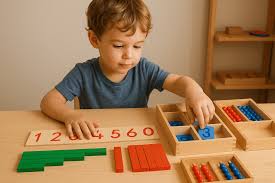
Finding reliable wholesale suppliers for Montessori math materials, especially for export, involves looking for quality, authenticity, and good communication. It’s about securing items that foster a child’s natural curiosity and mathematical understanding while navigating international shipping and customs. Careful selection ensures you get the best value and customer satisfaction.
Understanding Montessori Math Materials
Montessori math materials are special. They are not just toys. They are carefully designed tools. Dr. Maria Montessori created them. The goal is to help children learn math concepts. They do this through hands-on experiences. This hands-on approach is key. It helps kids grasp abstract ideas. They can see, touch, and manipulate the materials. This makes learning real and lasting.
Think about how a child learns to count. They might use small beads or blocks. They physically move these items. This shows them what numbers mean. It’s not just memorizing facts. It’s understanding the quantity. This concrete understanding is vital. It builds a strong math foundation. It supports deeper learning later on.
The materials themselves are often made of natural, beautiful things. Wood is common. Metal or glass might be used too. This connects the child to nature. It also feels good to hold. The design is simple and elegant. There are no bright, distracting colors. This helps the child focus. They see the mathematical concept clearly.
These materials cover many math areas. They teach numbers. They teach addition and subtraction. They teach multiplication and division. They even cover fractions and geometry. Each material has a purpose. It addresses a specific learning stage. This is part of the Montessori genius. It respects the child’s pace. It follows their natural development.
Why Wholesale and Export Matters
For many people, buying Montessori math materials wholesale is the only way to get enough items. If you run a school or a learning center, you need many sets. Buying single items is costly. Wholesale prices are lower. This helps your budget. It lets you buy more materials. It means more children can learn.
Exporting adds another layer. You might be in one country. You want to sell or use these materials in another. This requires extra steps. You need to know about shipping. You need to understand import rules. Customs can be tricky. You want to find suppliers who know about this. They can help make it smoother.
A good wholesale exporter is a partner. They understand your needs. They know how to pack items for travel. They can help with paperwork. This saves you time and stress. It also ensures the materials arrive safely. Broken or lost items are a nightmare. A reliable exporter prevents this.
Think about the Montessori community. It’s global. Children everywhere can benefit. Making these materials available worldwide is important. Wholesale and export help achieve this. They bridge distances. They bring quality educational tools to new places. It helps spread the Montessori way of learning.
Finding the Right Suppliers
When you look for Montessori math materials wholesale suppliers, what should you seek? First, quality is paramount. The materials must be durable. They must be safe for children. Look for smooth wood. Check for non-toxic finishes. The materials should be accurate to the Montessori method. Cheap imitations won’t work. They miss the educational point.
Next, consider the range of products. Do they have all the main math materials? Can you get a full set? Or do you need specific items? A supplier with a wide selection makes your job easier. You can buy everything from one place. This simplifies ordering and shipping.
Communication is also key, especially for export. Can you easily talk to them? Do they understand your questions? Are they responsive? This is vital when you’re dealing with different time zones and languages. A supplier who communicates well will solve problems faster.
For export, ask about their experience. Have they shipped to your country before? What are their shipping partners like? Do they offer different shipping options? Can they provide tracking? Understanding these details helps you plan. It also gives you confidence. You know your order is in good hands.
Look for suppliers who are passionate about Montessori. They understand the philosophy. They care about the quality. They are not just selling products. They are supporting education. This passion often translates into better service. It means they are more likely to go the extra mile.
What to Look For in Montessori Math Materials
Let’s dive deeper into the materials themselves. For wholesale and export, you need to be sure about authenticity. Genuine Montessori materials have specific characteristics. They are designed for precise learning.
For number work, you might see the Golden Beads. These are crucial for understanding the decimal system. They show units, tens, hundreds, and thousands. The beads are of different sizes. This helps children visualize place value. They feel the difference. They see the difference. A good wholesale supplier will offer authentic sets.
Then there are the Number Rods. These are ten rods of different lengths. They are often painted red and blue in sections. They teach the concept of quantity. They also help with number recognition. Each rod corresponds to a number. The length represents the amount. This is a tactile way to learn.
The Sandpaper Numerals are another classic. These are wooden tablets. Each has a numeral made of sandpaper. Children trace the numeral with their finger. This connects the visual symbol to a tactile sensation. It prepares them for writing. It’s a very sensory way to learn.
For addition, subtraction, multiplication, and division, there are the Bead Chains. These are long chains of beads. They help teach skip counting. They also show multiplication facts. The chains can be unrolled. This shows the quantity visually. It links the abstract operation to a concrete representation.
The Fraction Skittles are important for understanding parts of a whole. They come as a whole circle and then parts. Children can physically put the parts together. They see how they form the whole. This makes fractions less scary. It makes them easy to understand.
When you buy wholesale, check the material. Is it solid wood? Is the paint smooth and safe? Are the edges rounded? Are the parts sized correctly? These details matter. They impact the child’s learning experience. They also impact the durability of the materials.
The Export Process Explained
Exporting Montessori math materials wholesale can seem complicated. But breaking it down makes it manageable. The first step is choosing your supplier. As we discussed, find one with export experience. They will guide you.
Next, you need to arrange shipping. Your supplier might offer this. They may work with freight forwarders. These are companies that handle international transport. They can ship by sea or by air. Sea freight is cheaper but slower. Air freight is faster but more costly.
You’ll need to consider packaging. Good suppliers know how to pack materials securely. They use strong boxes. They use protective padding. This is especially important for delicate items. They want the materials to arrive intact.
Customs and duties are a big part of export. Each country has its own rules. You may need to pay taxes or import duties. Your supplier might help with this. They can provide the correct paperwork. Sometimes, the shipping company can handle customs clearance. You should research your country’s import laws. This will give you an idea of costs.
Insurance is also a good idea. What if something happens to the shipment? Insurance protects your investment. It means you can get reimbursed if goods are lost or damaged. Your supplier or freight forwarder can explain insurance options.
Documentation is critical. You’ll need an invoice. You might need a packing list. Certificates of origin might be required. A good export supplier will have these ready. They know what’s needed for international trade.
Finally, delivery. Once cleared by customs, the goods will be delivered. This might be to a port. It might be to your door. Understand the terms of delivery. This is often called Incoterms. It clarifies who is responsible for what at each stage.
Challenges and Solutions
One common challenge is finding suppliers who meet both quality and price needs. You want authentic Montessori materials. But you also need them affordably, especially for wholesale. Some suppliers might offer very low prices, but the quality is poor. Others have great quality but are too expensive.
The solution is diligent research. Look for suppliers who specialize in Montessori education. Read reviews. Ask for samples if possible. Compare prices from several sources. Don’t be afraid to ask questions. A good supplier will be happy to answer them.
Another challenge can be communication issues with export. Language barriers or time zone differences can slow things down. To solve this, choose suppliers who have English-speaking staff. Use clear, simple language in your communications. Confirm important details in writing. Patience is also important.
Shipping costs can be a surprise. They can add up quickly for international orders. To manage this, compare quotes from different shipping companies. Your supplier might have preferred carriers they get good rates with. Ordering larger quantities can sometimes reduce the per-item shipping cost. So, planning your purchases ahead is helpful.
Customs delays are frustrating. They can happen for many reasons. To minimize this, ensure all your paperwork is perfect. Provide accurate product descriptions. Follow your country’s import regulations closely. Sometimes, hiring a customs broker can help. They are experts in navigating these rules.
Sometimes, the materials might not be exactly what you expected. This is why asking for samples is a good idea, if feasible. If you receive an order and it’s not right, contact the supplier immediately. A reputable wholesale exporter will want to fix the issue. They value long-term relationships.
Real-World Montessori Math in Action
I remember visiting a Montessori school once. The children were working with the Stamp Game. This material is amazing. It uses small stamps representing units, tens, hundreds, and thousands. Children use these stamps to perform all four operations. They physically group and regroup the stamps. It makes arithmetic very concrete.
One little girl, maybe six years old, was working on multiplication. She had a multiplication board. She was using small red beads to represent the answer. She was so focused. She was placing the beads carefully. She was counting the groups. Her teacher checked her work. She had gotten it right. Her face lit up with a quiet confidence.
This is the magic of Montessori math. It’s not about pressure. It’s about discovery. The materials empower the child. They become little mathematicians. They explore concepts at their own pace. There’s no fear of making mistakes. Mistakes are just part of the learning journey.
In another instance, I saw younger children using the Spindle Box. This is a wooden box divided into sections. Each section has a number. Children place the correct number of spindles in each section. This links quantity to the numeral. They pick up the spindles. They count them. They place them in the right spot. It’s a simple but effective exercise.
These materials are designed to be self-correcting. The Spindle Box is a good example. If you put the wrong number of spindles in a section, it’s visually obvious. The number of spindles won’t match the number on the box. The child can see the error themselves. They can then correct it. This builds independence. It builds problem-solving skills.
It’s inspiring to see children so engaged. They are not being forced to learn. They are choosing to explore. They are building a deep understanding. This is what good wholesale, exported Montessori math materials can facilitate. They bring these powerful learning tools to children everywhere.
Tips for Importing Montessori Materials
When you’re importing Montessori math materials wholesale, a few extra tips can help. Firstly, understand your target market. If you’re importing for a specific country, learn its educational system’s needs. What materials are most sought after? What age groups are you serving?
Secondly, build relationships with your suppliers. Treat them like partners. Good communication and mutual respect go a long way. This can lead to better service and priority when new products are released.
Thirdly, plan your inventory. Don’t wait until you’re completely out of stock. International shipping can take time. Unexpected delays can happen. Keeping a buffer stock is wise. This ensures your operations run smoothly.
Fourthly, consider the packaging for resale. If you plan to sell these materials to others, how will they arrive? Will they be in plain boxes? Or will they have branding? Discuss packaging options with your supplier. Sometimes, custom packaging can be arranged.
Fifthly, be aware of certifications. Some regions might require certain safety or quality certifications for imported goods. Ensure your supplier can provide documentation if needed. This avoids headaches at customs.
Sixthly, have a clear return policy in mind, even for wholesale. While less common with wholesale, understanding the supplier’s policy for damaged or incorrect items is important. Knowing this upfront saves you from disputes later.
Navigating Different Montessori Material Types
It’s useful to categorize Montessori math materials. This helps when you’re building your wholesale order.
Materials for Introduction to Numbers
This includes items like the Number Rods, Sandpaper Numerals, and the Spindle Box. These focus on quantity recognition and the symbol for that quantity. They are often the first math materials a child encounters.
Materials for Decimal System Work
The Golden Beads are the star here. They help children understand the value of units, tens, hundreds, and thousands. The Short Bead Stair and Long Bead Stair also introduce linear counting and multiples.
Materials for Operations (Addition, Subtraction, Multiplication, Division)
These include the Stamp Game, Small Bead Frame, and Large Bead Frame. The Checkerboard is used for multiplication. The Euclidean-Pierred Cube is for multiplication with larger numbers. The Binomial Cube and Trinomial Cube are more advanced geometry and algebra introductions.
Materials for Fractions
The Fraction Skittles, Fraction Circles, and Fraction Insets help children understand parts of a whole. They explore equivalent fractions and simple operations with fractions.
Materials for Geometry
Geometry in Montessori often starts with shapes. The Geometric Cabinet and Geometric Solids introduce nomenclature and properties. The Constructive Triangles allow children to build complex shapes from simpler ones.
When you order wholesale, think about which categories are most important for your needs. Are you setting up a new classroom? Do you need a full range? Or are you stocking up on essentials for a specific age group?
Quick Scan: Wholesale Montessori Math Needs
Item Type
Key Focus
Example Materials
Purpose for Child
Intro to Numbers
Quantity & Symbol
Number Rods, Sandpaper Numerals
Learn what numbers mean.
Decimal System
Place Value
Golden Beads, Stamp Game
Understand units, tens, hundreds.
Arithmetic Operations
Addition, Subtraction, etc.
Bead Frames, Checkerboard
Practice calculations concretely.
Fractions
Parts of a Whole
Fraction Skittles, Circles
Grasp how fractions work.
Quality Control: What to Insist On
For Montessori math materials wholesale, especially for export, quality control is non-negotiable. You’re not just buying items; you’re investing in education.
Material Safety
All materials must be child-safe. This means non-toxic paints and finishes. Wood should be smooth, with no splinters. Small parts should not be a choking hazard for the intended age group. Ask suppliers for safety certifications or compliance statements.
Durability
Montessori materials are used daily by many children. They need to withstand frequent handling. Solid wood construction is a must for many items. Metal parts should be sturdy. Joints should be well-made. Poorly made materials break easily. This leads to replacement costs and interruptions in learning.
Accuracy to Montessori Principles
The materials must be true to Dr. Montessori’s designs. This includes correct dimensions, colors, and functionality. For instance, the Golden Beads must show the correct relationship in size between units, tens, hundreds, and thousands. An inaccurate bead for a thousand is a significant error.
Aesthetic Appeal
While function is primary, the aesthetic of Montessori materials is also important. They are meant to be beautiful and inviting. Natural wood grains, smooth finishes, and simple designs are characteristic. They should not look like cheap plastic toys.
When you engage with a wholesale exporter, don’t hesitate to ask about their quality control processes. How do they ensure each batch of materials meets their standards? Do they have an in-house inspection team? What happens if a customer receives a faulty item?
Working with Export Agents
Sometimes, dealing directly with a foreign supplier can be tough. This is where export agents can be a real help. An export agent is a third party. They specialize in international trade. They can help you find suppliers. They can negotiate prices. They can manage logistics.
If you’re new to importing Montessori math materials wholesale, an agent can be invaluable. They understand the customs procedures in both countries. They know the shipping regulations. They can handle the paperwork. This saves you a lot of time and effort. It also reduces the risk of errors.
You would typically pay the agent a fee for their services. This might be a percentage of the order value or a fixed rate. However, the peace of mind and the efficiency they bring can often outweigh the cost. They act as your local representative in the supplier’s country.
When choosing an export agent, look for one with experience in your specific industry. Do they know about educational materials? Have they worked with toy or learning material manufacturers before? Experience in the Montessori niche would be a bonus. Check their references and reputation.
Logistics and Shipping Options
Understanding your shipping options is crucial for importing Montessori math materials wholesale. The choice often comes down to speed versus cost.
Ocean Freight
This is the most common and cost-effective method for large, heavy shipments. Goods are loaded into shipping containers. They travel by cargo ship. It can take several weeks, sometimes months, depending on the route and port congestion. It’s ideal for non-urgent, bulk orders.
Air Freight
This is much faster than ocean freight. Your materials will arrive in days. However, it is significantly more expensive. Air freight is best for urgent orders or high-value, low-volume items where speed is critical.
Express Couriers (e.g., DHL, FedEx, UPS)
These services are usually for smaller packages. They offer door-to-door delivery and fast transit times, similar to air freight. They are convenient but can be costly for bulk wholesale orders.
Consolidation Services
Some suppliers or freight forwarders offer consolidation. They combine smaller shipments from different customers into one larger shipment. This can help reduce costs for smaller wholesale orders.
When discussing shipping with your supplier, clarify what is included in the shipping quote. Does it include pickup from the factory? Does it include delivery to your door? Are customs duties and taxes included, or are they separate? These details, often outlined in Incoterms, are vital. For example, FOB (Free On Board) means the supplier is responsible until the goods are on the ship. CIF (Cost, Insurance, and Freight) means the supplier covers the cost, insurance, and freight to your destination port.
The Importance of Authenticity
In the world of Montessori, authenticity is not just a buzzword. It’s about the core of the educational method. Genuine Montessori math materials wholesale are designed with a specific pedagogical purpose. They are not merely educational toys. They are carefully crafted tools for development.
If you import mass-produced imitations, they might look similar. But they often lack the precision. The size relationships might be off. The tactile qualities might be poor. The materials might not be self-correcting. This can hinder a child’s learning. It can even frustrate them.
Dr. Montessori’s insights were profound. She observed children closely. She understood how they learn best. Her materials are the physical embodiment of her philosophy. They provide the “directress” for the child’s innate drive to learn.
When you source wholesale, look for suppliers who understand this. They should be able to explain why their materials are authentic. They should be able to talk about the materials’ purpose. This shows they are knowledgeable. It shows they respect the Montessori method.
For example, consider the Seguin Boards, used for learning teens and tens. They have specific insets and tiles. The precise fit and number of insets are crucial for the child to understand the concept of ten units making a ten, and ten tens making a hundred. A slightly off dimension would disrupt this.
So, when you’re looking at wholesale options, don’t be tempted by the cheapest offer if it sacrifices authenticity. The long-term benefits of using genuine materials far outweigh any short-term cost savings.
Myth vs. Reality: Montessori Math
Myth: Montessori math materials are just expensive blocks.
Reality: Each material is a carefully designed tool. It helps children grasp abstract math concepts through concrete, sensory experiences. They promote independence and self-correction.
Myth: Children learn math faster with flashcards.
Reality: While flashcards can help with rote memorization, Montessori materials build deep conceptual understanding. This foundation leads to better problem-solving and a genuine love for math.
Myth: Only very young children use Montessori math.
Reality: Montessori math materials span from early counting and number sense to complex algebra and geometry. They are designed to adapt to the child’s developmental stages.
Myth: Montessori math is too complex for average kids.
Reality: The materials are designed to be intuitively understood by children. They break down complex ideas into manageable, hands-on steps, making math accessible to all.
Building a Long-Term Partnership
When you find a good supplier for Montessori math materials wholesale, especially one that exports well, aim to build a long-term relationship. This isn’t just about repeat business. It’s about mutual growth and understanding.
A strong partnership means:
Consistent Quality: You can rely on the materials always being up to standard.
Better Pricing: Over time, loyal customers often get better rates.
Priority Service: You might get early access to new products or faster shipping.
Problem Resolution: If issues arise, a trusted partner will work hard to fix them.
Shared Knowledge: You can learn from their experience in the market, and they can learn from your needs.
To foster this, be a good customer. Pay on time. Communicate clearly and politely. Provide feedback, both positive and constructive. If there are issues, approach them collaboratively. Show that you value their work.
This approach is especially valuable in international trade. Building trust across borders takes time and effort. But the rewards are significant. You create a reliable supply chain. You ensure your children or customers receive the best possible materials.
Final Thoughts on Exporting
Importing Montessori math materials wholesale is a rewarding venture. It allows you to bring high-quality educational tools to children. It supports the spread of a proven learning method. The key is thorough research. It’s about finding reputable suppliers. It’s about understanding the logistics of export.
Don’t be afraid to ask questions. Seek out partners who are knowledgeable and passionate about Montessori education. Prioritize quality and authenticity. Plan your shipping and customs procedures carefully. With the right approach, you can successfully source and import these valuable materials. This empowers children to explore the wonders of mathematics with joy and confidence.
Frequently Asked Questions
What makes Montessori math materials unique?
Montessori math materials are unique because they are designed for hands-on learning. They use sensory experiences to teach abstract concepts. Each material has a specific purpose and is often self-correcting. They encourage independence and a deep understanding, not just memorization.
How do I ensure the quality of wholesale Montessori math materials?
To ensure quality, look for suppliers who specialize in authentic Montessori materials. Ask about the materials used (e.g., solid wood, non-toxic finishes). Request safety certifications if possible. Read reviews from other buyers. If feasible, order a sample first to check craftsmanship.
What are the main challenges when exporting Montessori math materials?
Key challenges include navigating international shipping costs and times. There are also customs regulations, import duties, and potential language barriers with suppliers. Ensuring consistent quality across different batches can also be a concern.
Is it better to buy directly from a manufacturer or use a wholesale exporter?
Buying directly can sometimes offer lower prices. However, wholesale exporters often have more experience with international shipping, customs, and managing smaller orders. They can be a good starting point, especially if you are new to importing. Many manufacturers also offer wholesale direct.
What is the role of a freight forwarder in exporting Montessori math materials?
A freight forwarder helps manage the logistics of international shipping. They arrange for transportation (sea, air, or land), handle documentation, book space on ships or planes, and can assist with customs clearance. They are crucial for smooth transit.
Can I import just a few Montessori math materials, or is it only for bulk orders?
You can import smaller quantities, but wholesale pricing is usually for larger orders. Shipping costs per item will be higher for small orders. If you need a few items, look for retailers who source wholesale and sell individually, or find suppliers who offer smaller minimum order quantities.
What is the Golden Beads material used for in Montessori math?
The Golden Beads are used to teach the decimal system. They help children understand the quantity and value of units, tens, hundreds, and thousands. They show the relationship between these place values in a concrete, visual, and tactile way.